The CESP Programme is designed to equip professionals with the essential knowledge and tools to lead ESG and sustainability efforts in their organizations.
You’ll gain practical insights into ESG principles, global reporting standards (like GRI, TCFD, ISSB), and how to align sustainability strategies with business goals.
Through real-world case studies and expert-led sessions, this programme helps you turn ESG concepts into action — whether you're new to the field or looking to enhance your impact.
ISO 14001:【2026】 JUST RELEASED
But is your system still based on the 【2015】 version?
That gap = potential NCR during your next audit.
Join our FREE 2hrs webinar to understand:
⚠ What has changed in ISO 14001:2026
⚠ Where your current EMS may be at risk
⚠ What you should fix before your next audit
(Don’t wait until the audit to find out)
Visit one of KiwaCert’s certified clients, and gain exclusive insights into how a leading food industry company builds sustainable food safety, quality, and operational excellence through internationally recognized certification systems.
EXEMPLAR GLOBAL certified ESG Assurance Certification Lead Auditor Course
The Exemplar Global Certified ESG Assurance Certification Lead Auditor Course is an intensive 2-day straining designed to equip professionals with the skills, knowledge, and certification required to become qualified ESG (Environmental, Social, Governance) auditors.
This course integrates ISO auditing frameworks (ISO 14001, ISO 26000, ISO 37001, ISO 19011) with ESG compliance, offering a robust, ISO-based approach to ESG auditing.
By the end of this course, participants will be qualified to conduct and lead ESG audits as part of a comprehensive assurance program aligned with the KIWACERT ESG ASSURANCE: 2022 standards.
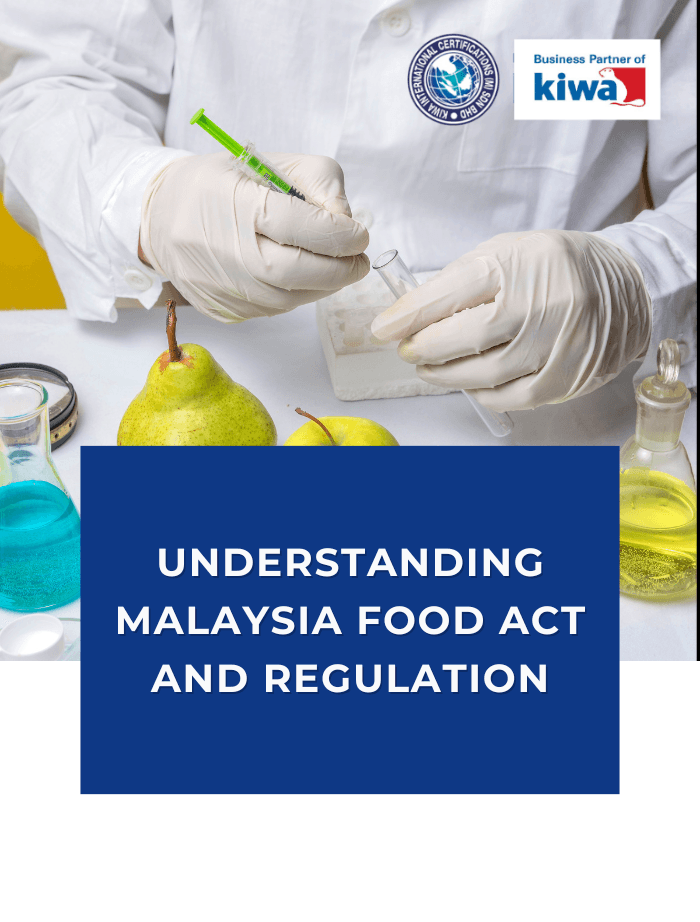
Understanding Malaysia Food Act and Food Regulation
Malaysia Food Act 1983 and Its Regulation 1985 regulated to protect the public against health hazards and fraud in the preparation, sale and use of food, and for matters incidental thereto or connected therewith. This course will provide knowledge on standard for a particular food including permitted food additive and nutrient and labelling requirements under Food Regulations 1985.
At the end of this course, participant shall be able to identify which regulations its food product is classified under the Food Regulation is 1985, and able to ensure compliance to these regulations and subsequently produce safe food for consumers.
CQI-9 4th Edition Heat Treatment System Assessment Awareness Training
Get an overview of the process requirements from the industry experts to develop a management system that prioritises defect prevention, variation reduction, and supply chain waste reduction that will help your organisation meet regulatory requirements, improve customer satisfaction, and identify areas for improvement.
EXEMPLAR GLOBAL certified FSSC 22000 NEW Version 6.0 Transition Training
This training program is designed to facilitate a smooth transition from previous versions to FSSC 22000 Version 6. Participants will gain a comprehensive understanding of the updated requirements, key changes, and essential elements necessary for compliance with the latest standards. The course will cover various aspects, including updated provisions, sector-specific requirements, and strategies for implementing Sustainable Development Goals within food safety management systems.
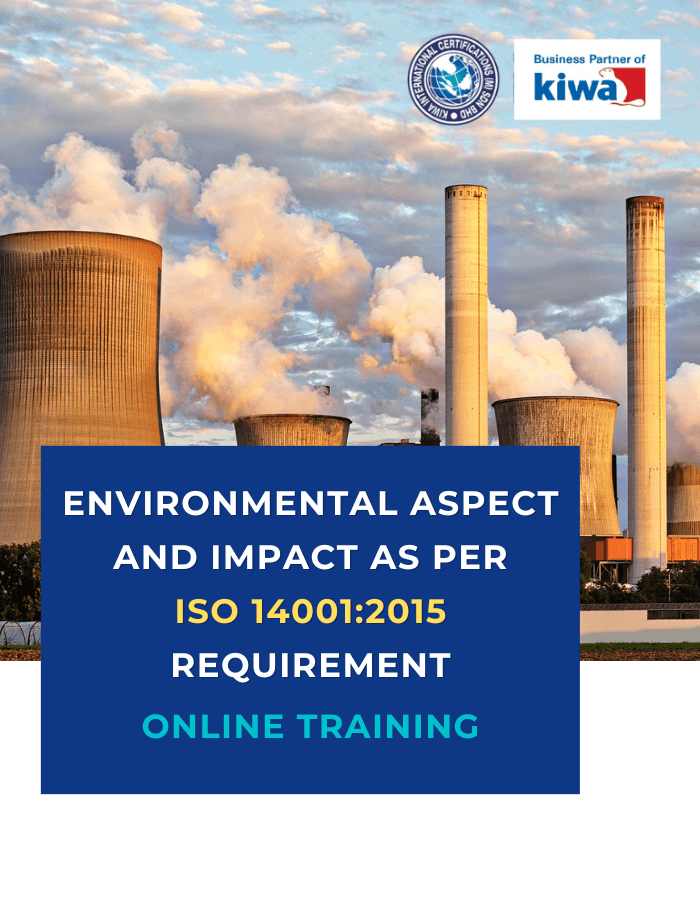
Environmental Aspect and Impact as per ISO 14001:2015 Requirement
Learn how to successfully conduct internal environmental aspect impact analysis for ISO 14000 implementation. This one-day course will cover the steps involved in aspect impact analysis, and use it to prevent pollution, minimize waste, improve productivity and efficiency.
ISO 9001:2015 introduces the new concept of context of the organization. This requires your organization to determine the issues and requirements that can impact on the planning of your Quality Management System (QMS).
Identify structure and requirements of an effective QMS and what this means for you. Gain a thorough understanding of the history and development of ISO 9001:2015, key terms, definitions and the ISO standardized high level structure. You’ll learn to interpret and apply the key concepts and principles of the standard to existing processes within your organization.
CQI-IRCA certified QMS inc IATF16949 Automotive Management System Lead Auditor Course
The most comprehensive course on ISO 9001:2015 and IATF 16949:2016 auditing techniques from the leading certification body in Automotive QMS Certification, delivered by our expert third party IATF 16949 and IRCA QMS Lead Auditor and Trainer Dr Kenny Chan TK!
MS2058:2018 Good Engineering Maintenance Management of Active Medical Devices
This course is established to provide industrial support through competent regulatory training to industry, user and other authority for achieving requirements of Medical Device Act (Act 737) and Medical Device Regulation 2012 (MDR 2012).
Safety Data Sheet Understanding and Application Methods
The safety data sheet (SDS) is a document used to communicate chemical hazard information from the manufacturer to the employee or the manufacturer/ supplier to the user. This is the information needed to inform and train employees on the safe use of hazardous chemicals. The employer is required to have an SDS for each hazardous chemical product they use.
QI-29 1st Edition Brazing System Assessment is intended to provide a common approach to a brazing management system for automotive production and service part organisations. It specifies process requirements for an organisation or its suppliers performing applicable aluminum and stainless-steel brazing.
Processes covered are CAB, Vacuum, Flame, and Induction brazing, and contain requirements for part print, control plan, braze quality inspection & reports, parameter documentation, maintenance rec
Exemplar Global Certified Automotive Core Tool linkages Competency Certificate
IATF 16949:2016 mandates the use of automotive core tools including PPAP, FMEA, SPC and MSA within the framework of Advanced Product Quality Planning (APQP) or project management. While many companies attempt to implement the tools, many fail to reap the benefits of continual improvement, defect prevention and the reduction in variation and waste. This is often because of a lack of competence in the effective use of the tools and their interactions.
For a well-designed EMS, your organization has to address risks and opportunities. These may arise from your significant aspects, compliance obligations or from other issues relating to your organization’s context. So whilst you can base your EMS on the best practice ISO 14001 standard, it needs to be relevant to your risks and opportunities. Therefore understanding risk-based thinking is crucial to ensure that your required actions can be integrated into your organization’s processes to enable an effective EMS.
ISO 9001:2015 Requirements & Internal Auditor Course
Identify structure and requirements of an effective Quality Management System and what this means for you. Gain a thorough understanding of the history and development of ISO 9001:2015, key terms, definitions and the ISO standardized high level structure.
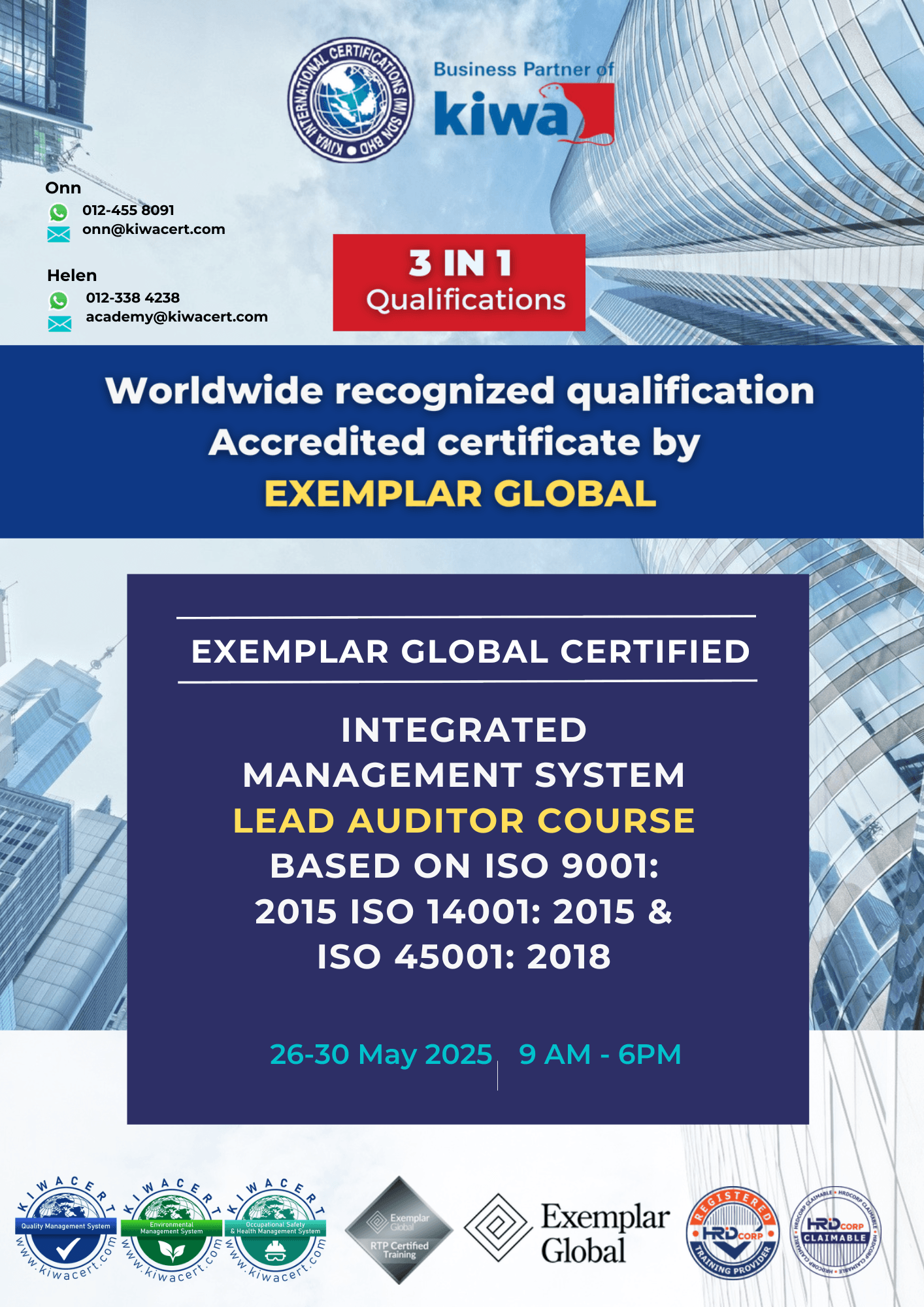
EXEMPLAR GLOBAL certified Integrated Management System Lead Auditor course based on ISO 9001, ISO 14001 & ISO 45001
Understand the structure and requirements of an effective Integrated Management System (IMS) and what this means for you. Learn about the history and evolution of ISO 9001:2015, ISO 14001:2015, and ISO 45001:2018, as well as key terms, definitions, and the ISO standardised high level structure. You will learn how to interpret and apply the key concepts and principles of the standards to existing processes in your organisation.
ISO 45001:2018 Lead Implementer Training Course (certified by Exemplar Global)
ISO 45001 applies to all types of organizations. It doesn't matter what they do or what size they are. It can help any organization to prevent work-related injury and ill-health and to provide a safe and healthy workplace.
ISO 45001:2018 Lead Auditor Training Course (certified by CQI-IRCA / Exemplar Global)
ISO 45001 applies to all types of organizations. It doesn't matter what they do or what size they are. It can help any organization to prevent work-related injury and ill-health and to provide a safe and healthy workplace.
The course is designed to ensure an understanding of current regulatory and legislative requirements, as well as an insight into bacteriology and safety precautions used to minimise risks associated with food preparation and storage.
Food safety training covers the essential aspects of food hygiene and safety throughout all stages of food handling, so that you can reduce food safety hazards and ensure that the food you work with is safe for customers to eat. You will also learn about the legal responsibilities of working with food and how to stay in compliance.
ISO 45001 applies to all types of organizations. It doesn't matter what they do or what size they are. It can help any organization to prevent work-related injury and ill-health and to provide a safe and healthy workplace.
ISO 45001 applies to all types of organizations. It doesn't matter what they do or what size they are. It can help any organization to prevent work-related injury and ill-health and to provide a safe and healthy workplace.
Exemplar Global certified - Food Safety Management System Internal Auditor Course based on FSSC 22000 version 5.1
The goal of implementing a food safety management system (FSMS) is to help a company enhance its food safety (FS) performance and manage its FS risks. Internal auditing is a critical component of a successful FSMS, and by attending this course, you will gain knowledge and abilities to help improve your company's FS performance.
This course will teach you how to examine and report on the conformity and implementation of FSSC 22000 processes. You'll learn how to plan and conduct audits, produce and disseminate audit reports, and complete follow-up tasks.
CQ1-17 2nd Edition Soldering System Assessment Training
The goal of the CQI 17 2nd Edition Soldering System Assessment is the development of a soldering management system that provides for continual improvement, emphasising defect prevention and the reduction of variation and waste in the supply chain. Coupled with an internationally recognised quality management system and applicable customer-specific requirements, it defines the fundamental requirements for soldering management systems and is intended to provide a common approach to a soldering management system for automotive production and service part organisations.
CQ1-15 2nd Edition Welding System Assessment Training
CQI-15 2nd Edition Welding System Assessment is intended to provide a common approach to a welding management system for automotive production and service part organisations. It specifies process requirements for an organisation or its suppliers performing applicable ferrous and non-ferrous metallic welding.
CQI-23 lst Edition Molding System Assessment Training
The goal of the CQI-23 1st Edition Molding System Assessment is the development of a molding management system that provides for continual improvement, emphasizing defect prevention and the reduction of variation and waste in the supply chain.
IATF 16949 Keep An Eye On Your Sanctioned Interpretation
A Sanctioned Interpretation changes the interpretation of a rule or a requirement which itself then becomes the basis for a nonconformity. The changes of requirements belong to certain clauses of the standard. These are always determined, approved and published by the IATF.
QI-29 1st Edition Brazing System Assessment is intended to provide a common approach to a brazing management system for automotive production and service part organisations. It specifies process requirements for an organisation or its suppliers performing applicable aluminum and stainless-steel brazing.
Processes covered are CAB, Vacuum, Flame, and Induction brazing, and contain requirements for part print, control plan, braze quality inspection & reports, parameter documentation, maintenance rec
Supplier Audit - Second Party Auditor Certification Program
Finding suppliers that operate at consistent levels of high quality is necessary to ensure that your own organization can perform at an equally high level. An effective audit is one of the most important methods for ensuring that your suppliers are always complying and conforming to set standards and requirements.
This course will show you how supplier audits enable your organization to reduce risks and build and maintain a robust management system, so you can continuously improve your contractual requirements and relationships with suppliers.